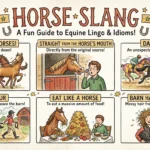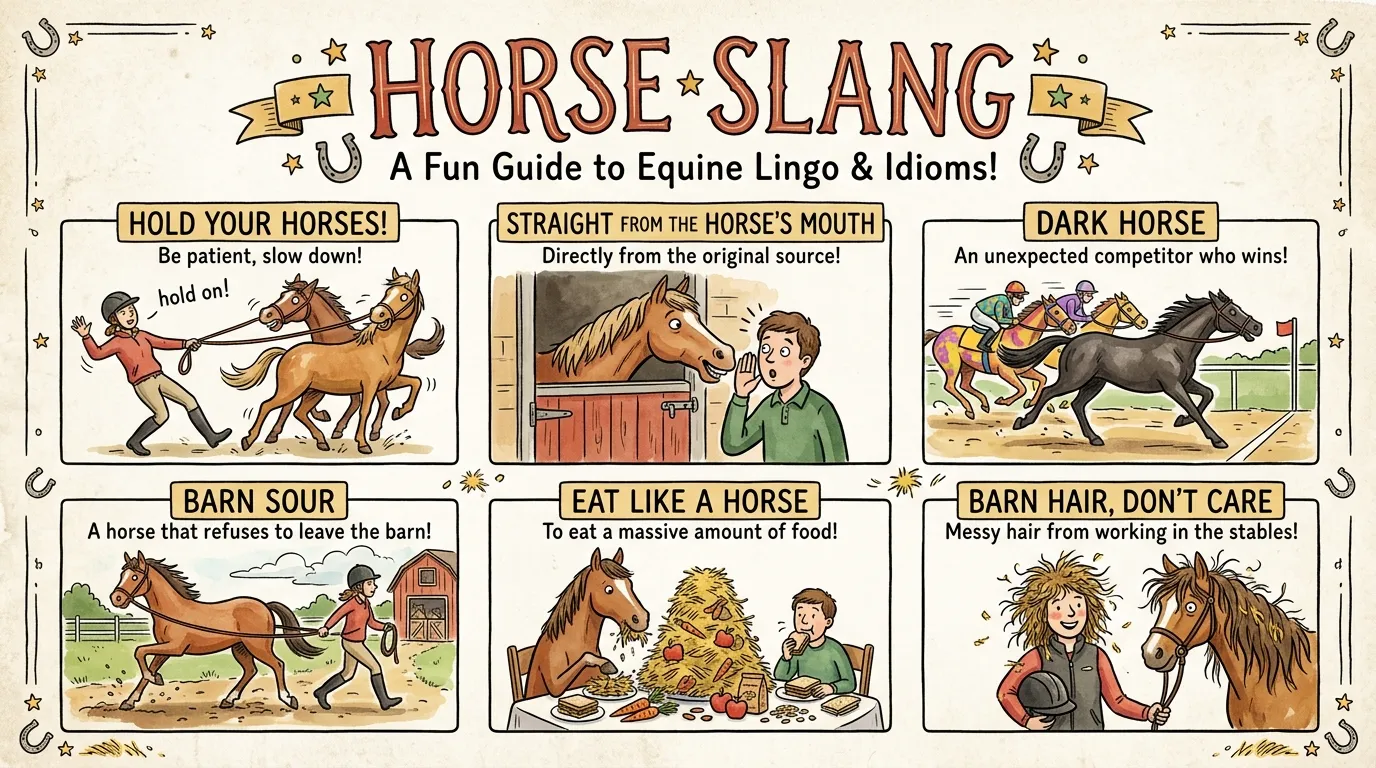
Have you ever heard someone call a person a horse and wondered what they actually meant? The word horse can sound simple, but in slang and everyday English, it can carry several different meanings depending on the sentence, situation, and community using it.
Someone might use horse to describe a strong or hardworking person. In another expression, it can refer to a large amount of something. Phrases such as dead horse, clothes horse, and black horse also have meanings that are quite different from the literal animal.
There is another interesting side to the word. Horses have long been associated with freedom, movement, endurance, strength, and emotional power. Because of this symbolism, encountering a horse or repeatedly noticing horse-related language may also feel meaningful to someone exploring spiritual or emotional symbolism.
So, what does horse slang mean? Let us explore the most common expressions, their possible meanings, drug-related slang, Urban Dictionary usage, and the deeper symbolism behind this powerful animal.
Dead Horse Slang Meaning
The phrase dead horse has several uses in English, and its meaning depends heavily on context.
One of the most common expressions is beating a dead horse. This means continuing to discuss, argue about, or work on something that is already settled or unlikely to change.
For example, if two people have already discussed a disagreement several times and one person keeps bringing it up, someone might say that they are beating a dead horse.
The expression can therefore symbolize wasted effort. From an emotional perspective, it may remind us that not every situation deserves endless energy.
A person may sometimes hold onto:
- An old argument
- A failed relationship
- A past mistake
- A goal that no longer fits
- A problem that cannot be changed
The symbolic lesson is not that giving up is always correct. Instead, it encourages reflection about whether continued effort is actually productive.
The literal image of a dead horse makes the expression memorable because it contrasts movement and life with something that can no longer move forward.
Clothes Horse Slang Meaning
A clothes horse is a person who is especially interested in clothing, fashion, or showing off different outfits.
The expression can sometimes be playful. It may describe someone who enjoys buying clothes, experimenting with fashion, or maintaining a large wardrobe.
For example:
She is such a clothes horse that her closet is bigger than her bedroom.
In British English, clothes horse can also refer literally to a folding frame used for drying clothes.
This makes the expression interesting because the same phrase can refer to either a person or an everyday household object.
When used about a person, the phrase usually focuses on their strong interest in clothing rather than simply saying that they own fashionable clothes.
From a symbolic viewpoint, clothing can represent identity and self-expression. A person who constantly changes their appearance may be exploring different sides of their personality or simply enjoying creativity.
Half Horse Slang Meaning
Half horse is not one universally established slang expression with a single dictionary definition. Its meaning can change according to the context in which it appears.
In fantasy, mythology, jokes, memes, gaming, or creative writing, half horse may describe a creature that is partly human and partly horse. The most familiar mythological example is the centaur, which traditionally has the upper body of a human and the body of a horse.
The phrase can also appear as informal descriptive language when someone compares a person’s behavior, strength, speed, or appearance to a horse.
Because half horse is not a standard slang term with one fixed meaning, it is important to examine the surrounding sentence before interpreting it.
Symbolically, the idea of being half human and half horse can represent a meeting of two different forces. The human side may represent thought, reasoning, and conscious choice, while the horse may symbolize instinct, movement, freedom, and physical energy.
Black Horse Slang Meaning
The phrase black horse can have different meanings depending on context.
In ordinary language, a black horse simply means a horse with a black coat. But black horse can also appear in figurative expressions and discussions of competition.
People sometimes confuse black horse with dark horse. The established expression dark horse generally refers to an unexpected or less-known competitor who may attract attention or perform surprisingly well.
A black horse, meanwhile, may be used literally or creatively rather than having one universal slang definition.
Black horses can also have strong symbolic associations. In different stories and traditions, black animals may represent mystery, power, independence, the unknown, or transformation.
If someone repeatedly notices black horses, the personal meaning may depend more on their circumstances and emotional response than on a universal spiritual rule.
For one person, a black horse might symbolize courage during uncertainty. For another, it might simply remind them of something they saw or experienced recently.
Horse Slang Meaning in English
So, what does horse mean in English slang?
There is no single slang definition. The word can take on different meanings depending on the expression.
In informal English, horse can sometimes describe someone who is:
- Very strong
- Hardworking
- Physically powerful
- Large or imposing
- Extremely capable at a demanding task
Expressions involving horse can also describe behavior, effort, fashion, competition, or quantities.
For example, horse around means to behave in a playful or foolish way rather than being serious.
Another familiar expression is hold your horses, which means to wait, slow down, or be patient.
The phrase dark horse describes an unexpected or previously less-known competitor.
There is also horse sense, meaning practical common sense or good judgment.
These examples show why looking only at the word horse is not enough. The surrounding phrase often determines the actual meaning.
Horse Slang Terms Drugs
The word horse can also appear in drug-related slang, particularly in references to heroin. In some slang dictionaries and historical usage, horse has been used as a term associated with heroin.
However, slang varies significantly by location, period, and social group. A word appearing in a drug slang glossary does not mean that it has that meaning every time someone says it.
For example, a conversation about horseback riding obviously has a completely different meaning from a conversation discussing illegal drugs.
This distinction is important because slang can be highly contextual.
Drug-related slang also changes over time. Terms that were recognized in one generation or location may become uncommon or acquire different meanings later.
Therefore, if you encounter horse in a drug-related context, the surrounding words are essential for understanding what the speaker means.
From a broader emotional perspective, this also demonstrates why language should not always be interpreted literally. A single word can carry completely different associations depending on who uses it, where it is used, and what is being discussed.
Horse Meaning Slang Urban Dictionary
Urban Dictionary contains user-submitted definitions for slang, informal expressions, jokes, and community-specific language. Because entries are created by users, definitions can vary considerably and should not automatically be treated as universal meanings.
The word horse may therefore appear with several informal interpretations.
Some entries may describe horse as a comparison for strength or size. Others may use it within a particular phrase, joke, community, or niche form of slang.
This is why an Urban Dictionary result should be considered a clue about possible usage rather than proof that everyone uses the word in that way.
When checking a slang term, consider:
- The complete sentence
- The speaker’s age and community
- The country or region
- Whether the conversation is serious or humorous
- Whether the word is part of a longer expression
- The date and context in which it was used
Context is especially important with words that have both ordinary and slang meanings.
The Emotional and Spiritual Meaning of a Horse
Beyond slang, horses have a powerful place in human imagination.
They are commonly associated with freedom, strength, movement, endurance, independence, and determination. These associations appear in stories, art, mythology, literature, and personal symbolism.
If you encounter a horse during an emotionally important period, you may naturally wonder whether it represents something deeper.
A reflective interpretation might involve asking:
Where am I trying to go?
Horses are animals of movement. Seeing one may encourage you to think about whether you are progressing toward something meaningful or simply moving because you feel pressured.
What is controlling my direction?
A horse can represent both freedom and guidance. This creates an interesting emotional question: are you choosing your direction, or are circumstances choosing it for you?
Where do I need strength?
A horse’s physical power can become a personal metaphor for resilience. You may associate the animal with the strength needed to continue through a difficult chapter.
What does freedom mean to me?
For some people, horses immediately evoke open fields and independence. A horse encounter may therefore become a reminder to consider whether your current life gives you enough room to breathe, grow, and make your own decisions.
These interpretations are personal symbolism rather than proven predictions. The meaning that feels relevant should come from your own circumstances and emotions.
Why Horse Slang Can Have So Many Meanings
Language constantly changes.
Words develop new meanings through jokes, music, social groups, internet culture, regional speech, and repeated use. Horse is particularly interesting because it already appears in many established English expressions.
The same word can therefore move between literal meaning, metaphor, idiom, slang, and symbolism.
Consider these examples:
- A horse can be an animal.
- A clothes horse can be someone interested in fashion.
- Horse around means to behave playfully.
- Hold your horses means to wait.
- A dark horse can describe an unexpected competitor.
- Beating a dead horse refers to continuing a discussion or effort unnecessarily.
- Horse can also occur in historical or specialized drug slang.
None of these meanings should automatically replace the others. Context determines which interpretation makes sense.
3 Real-Life Scenarios
Scenario 1: A Friend Says You Are a Horse
Imagine that someone tells their friend, You are a horse when it comes to work.
They probably are not literally comparing the person to an animal. In context, horse may suggest that the person is extremely hardworking, persistent, or capable of handling a demanding workload.
The surrounding conversation determines whether the comparison is complimentary, humorous, or critical.
Scenario 2: Someone Says They Are Beating a Dead Horse
Suppose a group has already discussed a problem several times. One person brings it up again, and another says, We are beating a dead horse.
The speaker means that continuing the discussion is unlikely to produce anything useful.
The phrase encourages people to recognize when repeated effort has stopped producing progress.
Scenario 3: Someone Notices a Horse During a Difficult Time
Imagine someone is going through a major life transition and unexpectedly sees a horse while thinking about their future.
They may personally connect the animal with freedom, strength, or moving forward.
There is no universal rule saying the horse predicts a particular event. Instead, the encounter can become a meaningful personal symbol that encourages reflection.
FAQs About Horse Slang Meaning
1. What does horse mean in slang?
Horse does not have one universal slang meaning. Depending on context, it can describe strength, size, hard work, playful behavior, or appear in specific expressions and specialized slang.
2. What does dead horse mean in slang?
Dead horse commonly appears in the expression beating a dead horse, meaning to continue arguing about or discussing something that is unlikely to change.
3. What is a clothes horse?
A clothes horse can describe someone very interested in clothing and fashion. In British English, it can also mean a frame used for drying clothes.
4. Is horse a drug slang term?
Horse has been documented as slang associated with heroin in some contexts. Drug slang varies by location and time, so the surrounding conversation is important.
5. What does a horse symbolize spiritually?
Horses are often associated symbolically with freedom, strength, movement, endurance, independence, and personal power. The meaning of a personal horse encounter depends on the individual’s circumstances and interpretation.
Conclusion
The meaning of horse slang is much more interesting than a simple dictionary definition. Depending on the context, horse can describe strength, hard work, fashion, playful behavior, competition, or specialized slang.
Expressions such as dead horse and clothes horse demonstrate how dramatically a word can change meaning when placed inside a different phrase.
At the same time, horses carry a powerful emotional symbolism. Their connection with movement, freedom, endurance, and strength can make them meaningful personal symbols during periods of change.
If a horse catches your attention when you are facing an important decision or emotional transition, you can use that moment as an opportunity to reflect on where you are going, what is holding you back, and what kind of freedom you truly want.
Ultimately, language gives the word horse many meanings, while personal experience gives it meaning for you. Understanding the context can reveal the slang definition, while understanding your own emotions can reveal why the image or idea of a horse may have stayed with you.

Amelia Carter is a writer and symbolism researcher who explores the meanings people associate with everyday objects, colors, natural elements, and visual symbols. At Rankovistor, she focuses on making symbolism easy to understand while explaining how meanings can vary across cultures, traditions, and contexts. Her work covers topics ranging from colors and numbers to objects, nature, emotions, and common symbolic themes. Amelia takes a research-focused approach, separating widely recognized meanings from interpretations that depend on cultural or historical context. She enjoys turning complex symbolic ideas into clear, accessible explanations for curious readers. Through her articles, she helps readers discover the deeper meanings behind familiar symbols and understand how symbolism appears in everyday life, art, and culture.